Introduction
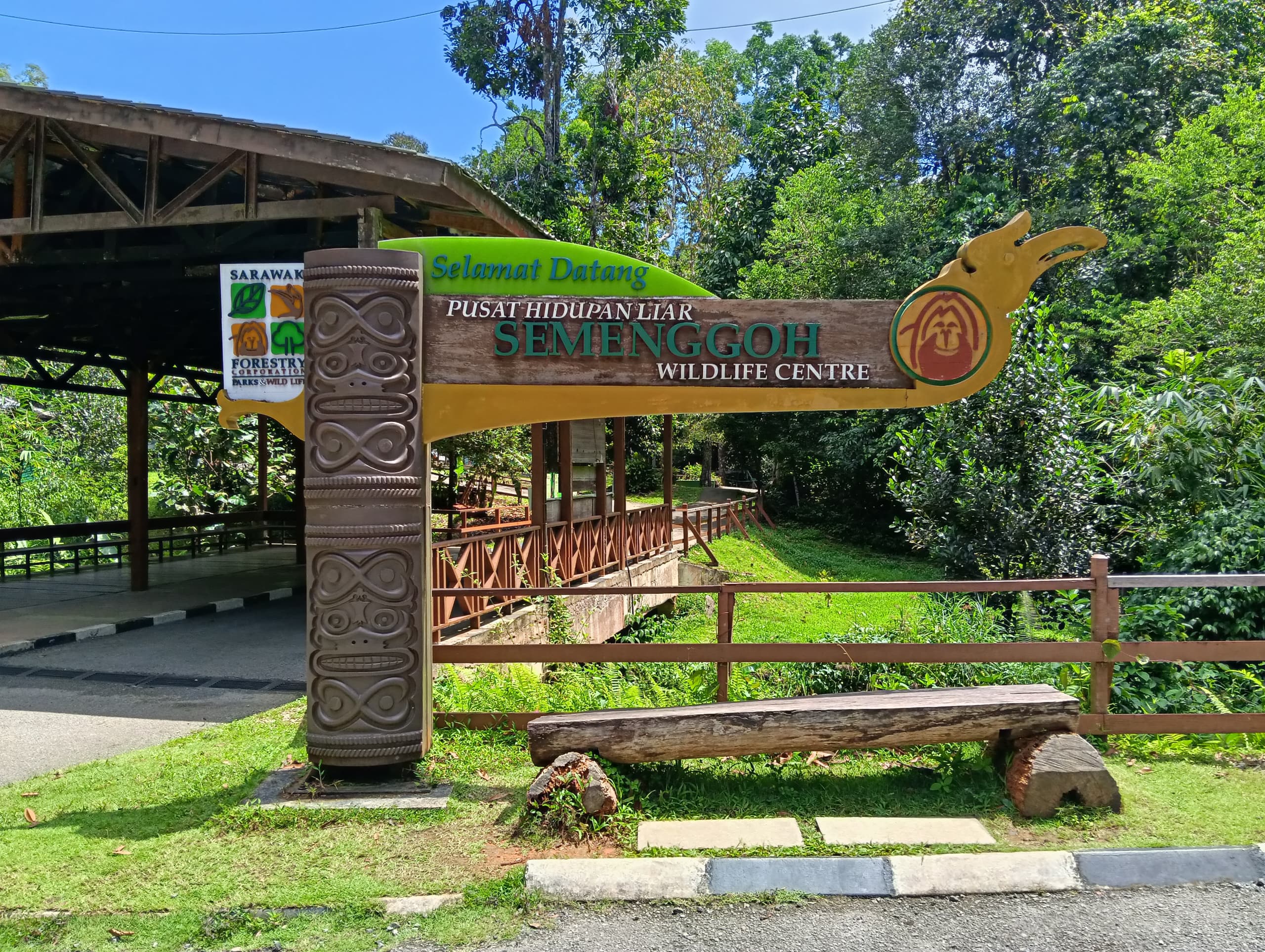
Established in 1975, the Semenggoh Wildlife Centre cares for wild animals that are injured, orphaned, or previously kept as illegal pets. Located just 24 km from Kuching, and its mission revolves around three core pillars:
- Rehabilitation: Rehabilitate injured or captive animals to prepare them for release into the wild.
- Research: Conducting wildlife research and breeding programs for endangered species.
- Education: Inspiring the public to value wildlife conservation.
While the Centre has cared for endangered animals from various species, it is also most renowned for its successful Orangutan Rehabilitation Program. As increasing numbers of rehabilitated orangutans were reintroduced, the forest eventually reached its capacity, leading rehabilitation efforts to be transferred to the Matang Wildlife Centre.
Today, Semenggoh focuses on research into orangutan biology and behavior while serving as a natural sanctuary for semi-wild orangutans, including those born in the wild to rehabilitated mothers. A visit to Semenggoh offers a rare chance to observe these remarkable animals in their natural environment.
"Person of the Forest"
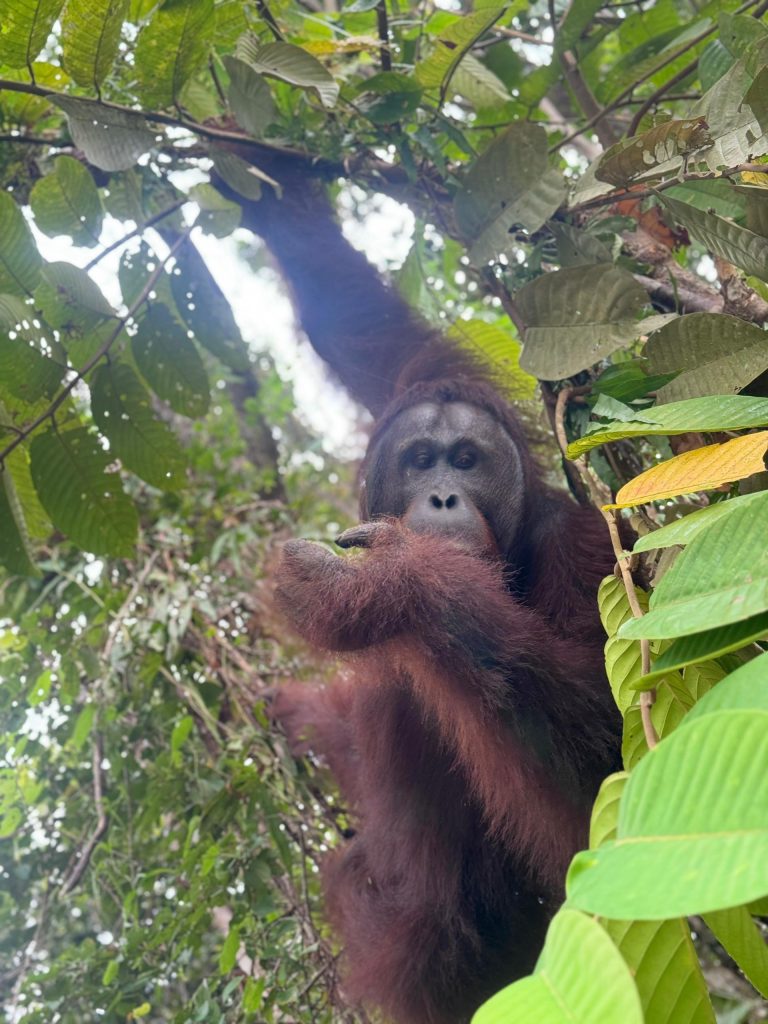
The orangutan (Pongo pygmaeus) gets its name from the Malay words "Orang" (i.e., person) and "Hutan" (i.e., forest). Found in the rainforests of Malaysian Borneo (Sarawak and Sabah), Indonesian Borneo (Kalimantan), and North Sumatra, these primates are almost entirely arboreal, spending their lives in the forest canopy.
Did you know? Mature males, with large cheek pads and a throat sac, can reach 150 cm in height, weigh up to 100 kg, and have an arm span of 240 cm. Females are smaller, with both sexes having long reddish hair. Females give birth every 7-8 years and mature at 12, while males mature at 15. Orangutans can live over 50 years in captivity.
Orangutans are primarily fruit-eaters but they also consume leaves, insects, bark, flowers, eggs, and small lizards, building new nests each night in the forest canopy. They are generally solitary due to food scarcity and lack of predators.
With an estimated 20-27,000 left in the wild, orangutans are endangered due to deforestation, habitat encroachment, hunting, and the live animal trade. Rehabilitation programs in Indonesia and Malaysia, like Sarawak's Semenggoh Centre, work to reintroduce rescued orangutans and educate the public.
Visit Us
Operation hours
8:00AM to 10:00AM
2:00PM to 4:00PM